The Origin
I was raised in New York City by a single mother — along with my younger brother. There was no blueprint. No safety net. No father in the picture walking me through what it meant to become a man. Just survival, and the need to become something more.
Growing up like that teaches you things that no classroom ever will. It teaches you how to read a room. How to handle adversity without falling apart. How to carry responsibility for someone else before you've even figured yourself out. Those early years didn't break me — but they set the stage for everything that was coming.
"There was no blueprint. No safety net. Just survival — and the need to become something more."
I failed high school. Not because I wasn't smart — but because I was misaligned, unanchored, and operating without a system. I was all potential and no structure. Sound familiar?
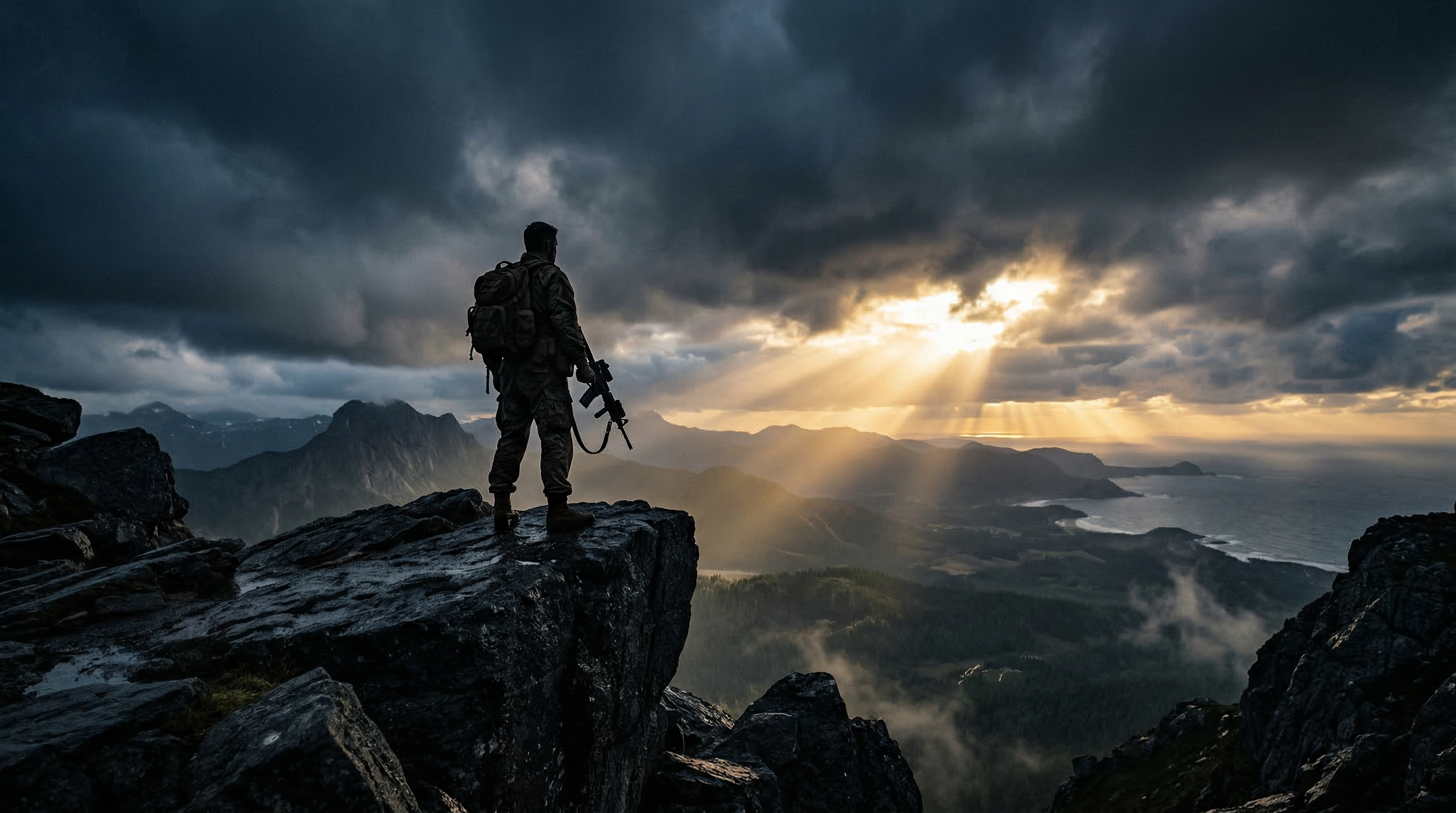
Then one day, I walked past a Marine Corps recruiting office. Something pulled me inside. The recruiter told me I could pick any job I wanted. I chose military intelligence. I scored in the top percentile on the ASVAB — proof that failing high school was never about capability. It was about direction.
The Marine Corps gave me the first version of a system. Structure. Discipline. A code of conduct that demanded excellence without negotiation. For the first time in my life, I had a framework — and I thrived inside it.
I went into military intelligence, which means I learned how to analyze, how to see patterns others miss, how to operate in high-pressure environments where the cost of error is measured in human lives. That training changed the way I think. It changed the way I process everything.
"The Marine Corps gave me the first version of a system. For the first time, I had a framework — and I thrived inside it."
But the military also exposed me to the cost of war. To loss in its most direct, unfiltered form. To the psychological weight that veterans carry long after the tours are over. What no one tells you is that coming home is sometimes harder than being deployed.
Over the years that followed, I experienced what I can only describe as a comprehensive dismantling of self. Pain. Significant loss. Conflict — both external and internal. Addiction. The slow erosion of everything I thought I was.
I've been at rock bottom. I know what it feels like to be completely disconnected from your own life — to be going through the motions, numbing out, convinced that this is just how it's going to be now. That the best version of yourself has already come and gone.
"I've been at rock bottom. I've lived in the darkness. And I came back. Not because someone saved me — but because I refused to stay."
The interesting thing about hitting the floor is that it clarifies everything. When you've lost enough, you stop pretending. You stop the performance. And in that brutal, stripped-down honesty, you either give up entirely — or you start building something real.
I chose to build.
The rebuild didn't happen overnight. It didn't happen in 30 days. It took years of ruthless trial and error — testing methods, discarding what didn't work, doubling down on what did. I was conducting field research on myself. My own body and mind became the laboratory.
What I discovered is that transformation isn't complicated — but it requires three things to be working simultaneously. Your body has to be in motion. Your mind has to be accountable. And you have to be connected to something larger than your current circumstances. Remove any one of these and the whole structure weakens.
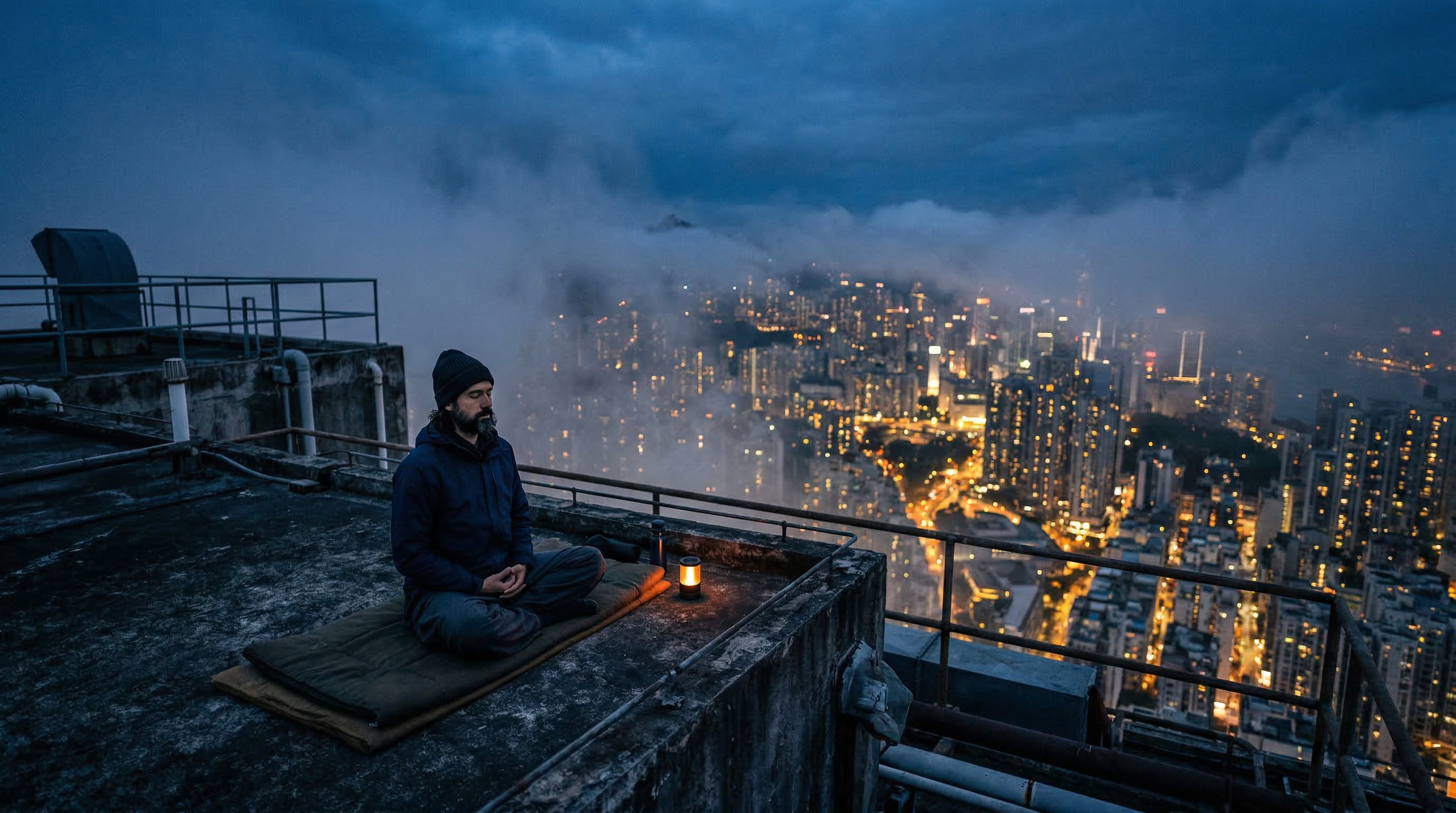
The Non-Negotiables emerged from this period. They were not invented — they were discovered. They are the daily practices that kept showing up as essential, the ones where skipping them even once had measurable consequences. These became the bedrock.
"The Non-Negotiables were not invented. They were discovered — through two decades of being the test subject."
Over twenty-five years, the system evolved and crystallized. Three pillars — physical fitness, mental discipline, spiritual awakening — built on a foundation of Non-Negotiables that can never be compromised.
This is not a program I read about in a book. This is a system I built by living it, testing it, failing with it, and refining it under the most difficult conditions a human being can face. Every element of The Protocol exists because it worked — repeatedly, and under pressure.

The spiritual pillar was the last to fully emerge — and it was the piece that made everything else sustainable. You can grind your way through physical fitness. You can white-knuckle your way through mental discipline. But without purpose, without connection to something larger than yourself, neither of those can hold. The third pillar is what makes the whole structure permanent.
I spent twenty-five years building this system for myself. For a long time, I wasn't sure it belonged to anyone else. But the more I shared pieces of it — in conversations, in the work I've done with others — the more I saw how desperately it was needed.
There are millions of people walking around with the same void I felt in my twenties. Smart, capable, driven people who are operating without a system. Who have never been given a framework that integrates the body, the mind, and the spirit simultaneously.
"I built The Protocol to save my own life. I'm sharing it because I know I'm not the only one who needed it."
This is why thisistheprotocol.com exists. This is why the YouTube channels exist. This is why the program exists. Not to sell you a fantasy — but to give you a system that actually works. One that was built in the fire, not in a boardroom.
The rescue mission starts with you. The Protocol gives you the map.